BVA312 Art History 5/3/19 Baroque Period
5/3/19 - Spain 1600 Baroque
Sister Wendy - watch YouTube
El Greco - Toledo - painted as he felt it should be. Doménikos Theotokópoulos (Greek: Δομήνικος Θεοτοκόπουλος [ðoˈminikos θeotoˈkopulos]; October 1541 – 7 April 1614), most widely known as El Greco ("The Greek"), was a painter, sculptor and architect of the Spanish Renaissance.
Died: 7 April 1614 (aged 72); Toledo, Spain
Known for: Painting, sculpture and architecture
Born: Doménikos Theotokópoulos; October 1, ...
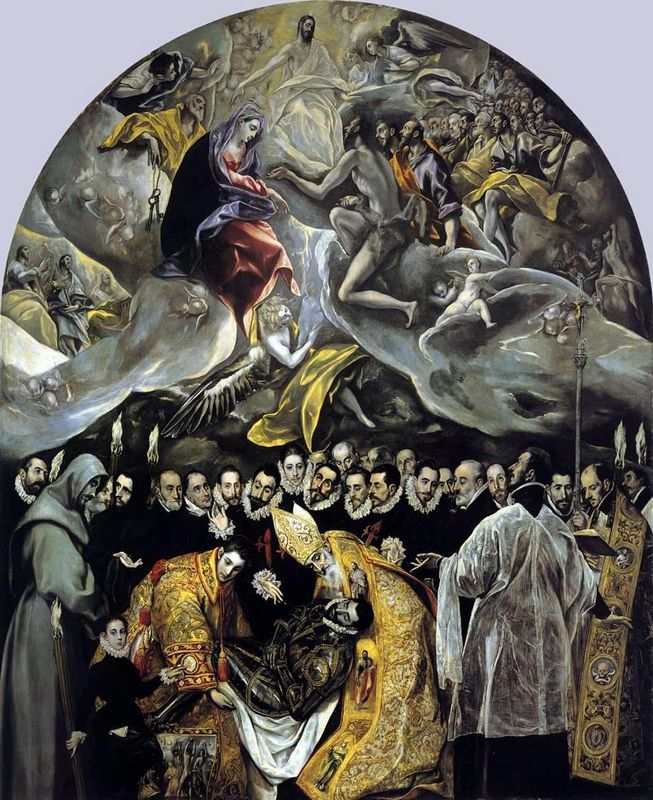 Nationality: Greek Spaniard
source Wikipedia : https://en.wikipedia.org/wiki/El_Greco
https://www.artble.com/artists/el_greco/paintings/the_burial_of_the_count_of_orgaz
Peter Paul Reubens - Ambassador beteween Spain and Protestant Britain. An Allegory of War and Peace. https://www.nationalgallery.org.uk/artists/peter-paul-rubens 1577-1640

One of the most influential Flemish painters of the Baroque period.
Captured beauty and fashion of the time, i.e. fat and pale white skin was in vogue as opposed to thin and tanned. Baroque involves emotions in their works.
Captured beauty and fashion of the time, i.e. fat and pale white skin was in vogue as opposed to thin and tanned. Baroque involves emotions in their works.
 |
His second wife Helena or is it?
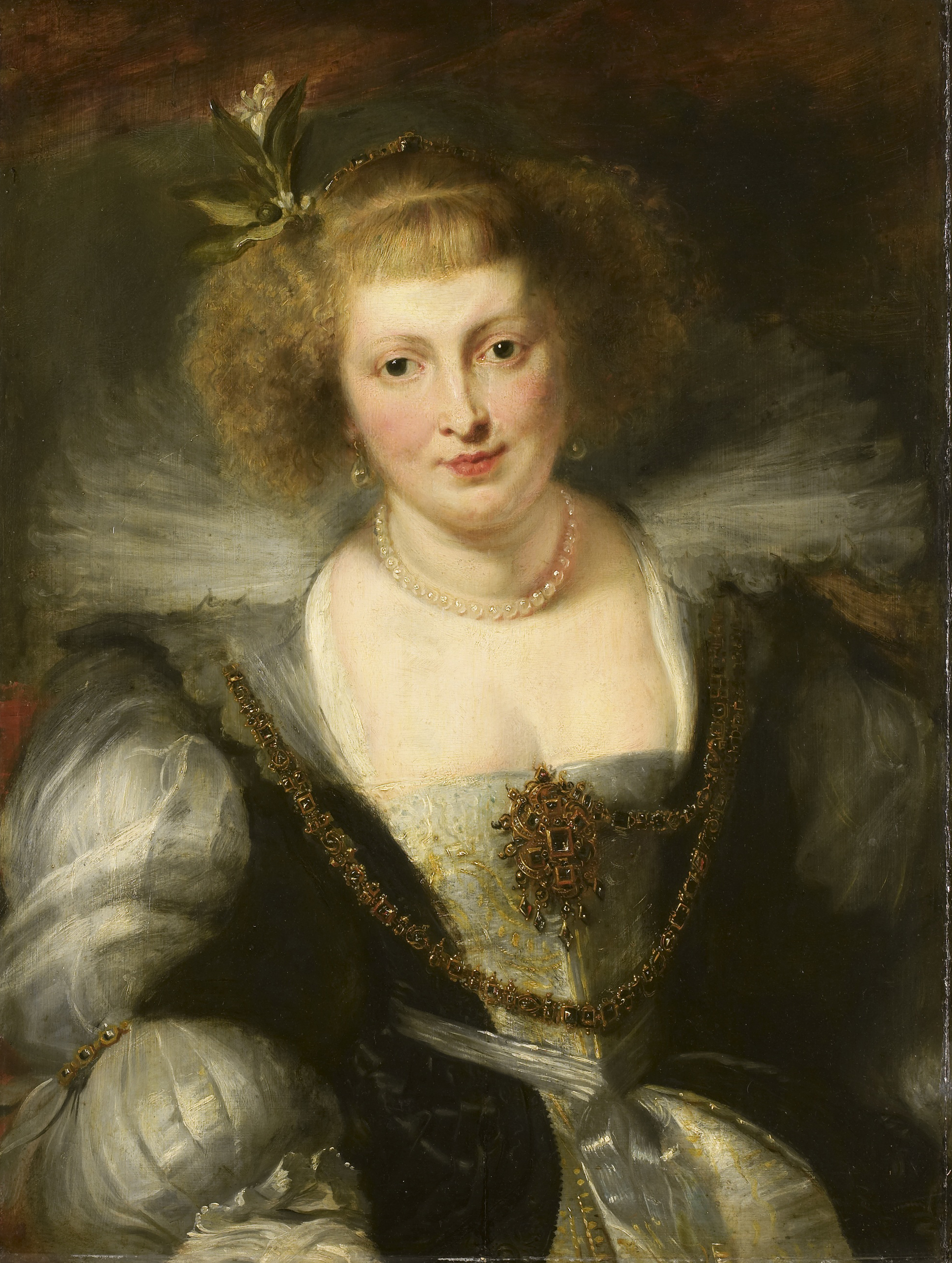  http://blog.courtauld.ac.uk/gallery/2012/06/22/video-on-rubens-helena-fourment-2/ Rubens presents his young wife, Helena Fourment, whom he married in 1630 after having been a widower for four years, and not yet ‘inclined to live the abstinent life of the celibate’. |
Spain in the Golden Age of Painting
In the 17th Century - Spain, France and Netherlands all had fabulous painters. Paintings adorned homes and businesses. Landscapes, views, ownership of valuable objects in still life. Painters painted real scenes. Frans Hals.
Vermeer, lived and worked in the city of Delft, painted variations of women in a window with light coming through. 11 children, wife and mother n law.
Holland, windmills - Rembrandt - son of a miller.
Master of self portrait - expressions and styles -
Born: 15 July 1606, Leiden, Netherlands
Died: 4 October 1669, Amsterdam, Netherlands
Full name: Rembrandt Harmenszoon van Rijn
Spouse: Saskia van Uylenburgh (m. 1634–1642)
https://mymodernmet.com/rembrandt-artwork/
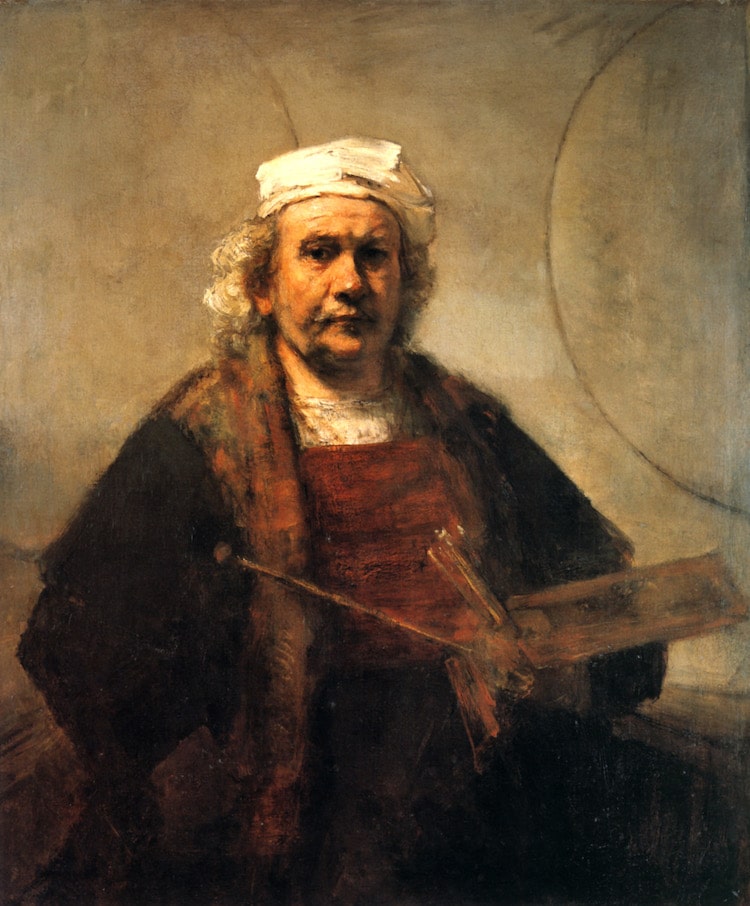
‘Self-Portrait with Two Circles’ (c. 1665-1669) (Photo: Terry Long via Wikimedia Commons Public Domain {PD-1923})
Rembrandt was a master of Chiaroscuro - strong differences between light and dark, usually in bold contrasts. Tenebrism, as used by Caravaggio or Gentileschi.


‘Self-Portrait with Two Circles’ (c. 1665-1669) (Photo: Terry Long via Wikimedia Commons Public Domain {PD-1923})
Rembrandt was a master of Chiaroscuro - strong differences between light and dark, usually in bold contrasts. Tenebrism, as used by Caravaggio or Gentileschi.
Spain -
King Philip 4th - patron and lover of art.
Born: 1599, Seville, Spain
Died: 6 August 1660, Madrid, Spain
Full name: Diego Rodríguez de Silva y Velázquez
Children: Francisca de Silva Velázquez y Pacheco, Ignacia de Silva Velázquez y Pacheco, Antonio de Silva
http://www.onstage.goodmantheatre.org/2015/10/06/10-of-velazquezs-most-famous-paintings/
Rome - 1650 - French Golden Age happened in Rome
Velazquez, painted 40 paintings of King Phillip IV (Hapsburg jaw)
Born: 15 June 1594, Les Andelys, France
Died: 19 November 1665, Rome, Italy
Spouse: Anne-Marie Dughet (m. 1630–1664)
considered a daunting artist. A thinker and intense painter. The most intellectual and most poetic of artists.
A Dance to the Music of Time (c. 1634-1636) is a painting by French artist Nicolas Poussin - https://www.ranker.com/list/famous-nicolas-poussin-paintings/reference
Born: 1600, Chamagne, France
Died: 23 November 1682, Rome, Italy
Known for: Painting
Landscape with Aeneas at Delos. Canvas of Claude Lorrain - 70x58cm
https://www.decorarconarte.com/epages/61552482.sf/en_GB/?ObjectPath=/Shops/61552482/Products/35711/SubProducts/35711-0002
Allegories - everything means somethings - meaning on meaning on meaning, in art is when the subject of the artwork, or the various elements that form the composition, is used to symbolize a deeper moral or spiritual meaning such as life, death, love, virtue, justice, etc ....Owens argues.
Johannes Vermeer - The art of the Painter. Camera obscura - 1666
Painting was lost and resurfaced in the 19th C. Hitler possessed it.
Girl with the Pearl Earring - Girl with a Pearl Earring
Dimensions: 44 cm x 39 cm
Created: 1665
Medium: Oil paint
This work is not considered a portrait,rather a representation of an exotic type - headdress and large earring. The light is one of the features of the work. Painter worked slowly, two or three paintings per year. The subject has 'the gaze' as her eyes meet ours. Like the Mona Lisa there is mystery about this painting.
Homework - a deeper dive or look into an issue with an artist. Presentation for next week. DUE 12/3/19
3. Poussin and Lorrain - discuss idealized and mythological landscape -
Powerpoint - 10 minutes - include question time. (2 minutes)
8-10 SLIDES - MINIMUM 15 SLIDES MAXIMUM - VIDEOS OPTIONAL AND ONLY 1 MINUTE LONG.
Sources - library book X 2 minimum - Museums/Khan Academy - Moma- etc - good coloured images - not scanned.
1024 X 768 is a good size
Bigraphical details, work details, art movement they're part of, media, working style, Who did they work for? Church or royalty? Commission?Major works of art and your favourite works of art.
How does this relate in any way to your own practice. i.e.
________________________________________________________________________
Powerpoint created - 6/3/19 - visited library and found a book on Poussin and another art history book that has information on Lorrain. Saved to Seagate drive - contains notes as well as slides and need to add information from books especially APA referencing.
12/3/19 HOMEWORK
Seminar No 1. Power Point presentations - Nicholas Poussin and Claude Lorrain - topic and PowerPoint due 9 April 2019. Drop box y Drive - Poussin and Lorrain. Fix up PowerPoint., typos.
Allegory - key word . The hidden meaning within as story or scene.
Artists practices are described not just explained.
The art and craft movement from the time of William Morris - idea for essay. 21 June 2500-3000 words
Referencing - APA insert citation - last name of author and page of book
________________________________________________________________________
Powerpoint created - 6/3/19 - visited library and found a book on Poussin and another art history book that has information on Lorrain. Saved to Seagate drive - contains notes as well as slides and need to add information from books especially APA referencing.
12/3/19 HOMEWORK
Seminar No 1. Power Point presentations - Nicholas Poussin and Claude Lorrain - topic and PowerPoint due 9 April 2019. Drop box y Drive - Poussin and Lorrain. Fix up PowerPoint., typos.
Allegory - key word . The hidden meaning within as story or scene.
Artists practices are described not just explained.
The art and craft movement from the time of William Morris - idea for essay. 21 June 2500-3000 words
Referencing - APA insert citation - last name of author and page of book
- Sister Wendy Beckett - you are working from episode - Story of painting
- Source - Film - fill out form on word References
- making it really clear where you got your information from
- make sure url's are manageable - put first part to get the viewer to where they should be.
- Own art work sources - eg photos - paintings - who, when, where, questions.
- Conversations - under interview
No typos - check, check and check again.
Presentation - should not have had typos in the slides - fix up before next time. Talk more about Lorrain.
Art History BVA312 Week 3 & 4
Baroque
YouTube From St Peter's to St Paul's - Art History Documentary
Vatican - understanding Baroque. no clear outline across this period of art went throughout the 17th Century and beyond.
Bellini - Piazza - colonnade, very lavish and impressively grand and dramatic - blurred divide between art and reality. Architecture, sculpture, music, art, Baroque went after you all at once with everything.
The movement traveled about and adopted the local customs. Martin Luther founder of Protestant movement - counter to Catholics and Rome. Lutherans were against art and saw it as a regrettable. Catholics saw art as something people could see God in / religion.
The council of Trent.
Turn a painting into theater with use of dark and light.
Caravaggio - lost for 300 years - he was misunderstood. Recent research has found him to be the most important religious painter. people could understand the language of his paintings. Subjects were real people in the paintings. Not from the imagination or gods of old. He reinvented religious art. Believable and tangible scenes and images. Santa maria Del Po polo.
Some paintings commissioned were rejected. Best painter of mary. His art style spread across Europe.
Renaissance is French for rebirth.
Baroque - Portuguese origins - misshapen pearl. Rome is a Baroque creation.
Boromini - Architect - speaks to the body not just the eyes.
Painted ceilings - the art is all around you and above you - a new reality. A 17th C virtual reality.
French Embassy in Rome. Karachi was the painter (with his brothers) Gods loving other gods, 20 love affairs on one ceiling. A series of individual pictures - joined with cherubs and guards - sometimes inside a picture, sometimes outside the picture. A jumble of realities. San Ignacio - Jesuit Brotherhood (priests) St Ignacio. Padre Potzo created optical illusions. Painted on the entire roof, shows a shortcut to heaven. Depicts where the Jesuits had their missions.
In the south of Italy, Naples. Goethe, "See Naples and die." what did he mean? Naples was the 2nd biggest city next to Paris in Europe. religion and wickedness hand in hand. Caravaggio in 1606, arrived in Naples after murdering a tennis friend. The Baroque art in Naples was darker and different to what had happened in Rome. The Seven Acts of Mercy - greatest painting of the 17th C. acts all combined in one painting. The 7 human kindnesses you practice and perform on your fellow man.
i.e. burying dead, feeding hungry, visiting prisoners, shelter to travelers.
Rivera - Bearded woman - a taste for the macabre. Leader of the Cabal of Naples. Beat and murdered rival painters. Baroque became tainted by the shenanigans in Naples.
Artists of interest:
Caravaggio
Bernini - David 1623-24 -
Jan Lorenza Bernini - all rounder , painter, sculptor, architect.
Dividning lines get blurred. St Tereasa. A young woman being overpowered by the love of God. A theatre, stone comes alive. Movement and restless transition.
Differences between Baroque and Renaissance
Tenebrism - darkness and light to draw in your eye.
Crucifixion of St Peter - Caravaggio.
Artemisia Gentileschi - 1593-1654 or later - one of the first great female painters
Self Portrait as St Catherine of
Raped by the artist Tassi, at age 17, tortured. Married off to a Florentine painter. She uses her won image in a lot of her works. Promoted her own image. First woman to join the artists academy.
She know Caravaggio, her father was an associate of his.
Judith and her Maidservant -
look how the same subject is treated by different artists.
Judith slaying Holofernes - 1611-12
 en.wikipedia.org
 then 1620-21
donttouchblog.com
then 1620-21
donttouchblog.com
Gian lorenzo Bernini, Apollo and Daphne - two sides to every story.
Art history homework -
uWhat are the differences between Renaissance and Baroque Art?
A: Renaissance art began early in the 1400s, while Baroque came later in the 1600s. 2. Renaissance artists like Michelangelo and Leonardo Da Vinci are more famous than Baroque masters Bernini and Caravaggio. ... Renaissance art works did not completely depict human emotion, while Baroque art focused more on showing them.Mar 15, 2011 http://www.differencebetween.net/miscellaneous/culture-miscellaneous/difference-between-baroque-art-and-renaissance/
uWhat is a camera obscura? Do you think that the case is strong or weak for Vermeer’s use of this technology?
A: From an optical standpoint, the camera obscura is a simple device which requires only a converging lens and a viewing screen at opposite ends of a darkened chamber or box. It is essentially a photographic camera without the light-sensitive film or plate.
http://www.essentialvermeer.com/camera_obscura/co_one.html#.XQDa7lwzaUk link contains a good review of the technique and which artists used the device to assist their paintings.
uFind an example of “tenebrism” and discuss the use of light and dark in baroque art.
A: Tenebrism :noun
-
a style of painting developed by Caravaggio and other 17th-century Spanish and Italian artists, characterized by predominantly dark tones and shadows with dramatically contrasting effects of light.
uCompare and contrast tenebrism, as used by the Italian baroque artists, and chiaroscuro, as used by Rembrandt and Vermeer
Chiaroscuro - chiaroscuro
Art history homework -
uWhat are the differences between Renaissance and Baroque Art?
A: Renaissance art began early in the 1400s, while Baroque came later in the 1600s. 2. Renaissance artists like Michelangelo and Leonardo Da Vinci are more famous than Baroque masters Bernini and Caravaggio. ... Renaissance art works did not completely depict human emotion, while Baroque art focused more on showing them.Mar 15, 2011 http://www.differencebetween.net/miscellaneous/culture-miscellaneous/difference-between-baroque-art-and-renaissance/
A: Renaissance art began early in the 1400s, while Baroque came later in the 1600s. 2. Renaissance artists like Michelangelo and Leonardo Da Vinci are more famous than Baroque masters Bernini and Caravaggio. ... Renaissance art works did not completely depict human emotion, while Baroque art focused more on showing them.Mar 15, 2011 http://www.differencebetween.net/miscellaneous/culture-miscellaneous/difference-between-baroque-art-and-renaissance/
uWhat is a camera obscura? Do you think that the case is strong or weak for Vermeer’s use of this technology?
A: From an optical standpoint, the camera obscura is a simple device which requires only a converging lens and a viewing screen at opposite ends of a darkened chamber or box. It is essentially a photographic camera without the light-sensitive film or plate.
http://www.essentialvermeer.com/camera_obscura/co_one.html#.XQDa7lwzaUk link contains a good review of the technique and which artists used the device to assist their paintings.
A: From an optical standpoint, the camera obscura is a simple device which requires only a converging lens and a viewing screen at opposite ends of a darkened chamber or box. It is essentially a photographic camera without the light-sensitive film or plate.
http://www.essentialvermeer.com/camera_obscura/co_one.html#.XQDa7lwzaUk link contains a good review of the technique and which artists used the device to assist their paintings.
uFind an example of “tenebrism” and discuss the use of light and dark in baroque art.
A: Tenebrism :noun
A: Tenebrism :noun
- a style of painting developed by Caravaggio and other 17th-century Spanish and Italian artists, characterized by predominantly dark tones and shadows with dramatically contrasting effects of light.
uCompare and contrast tenebrism, as used by the Italian baroque artists, and chiaroscuro, as used by Rembrandt and Vermeer
Chiaroscuro - chiaroscuro
Chiaroscuro - chiaroscuro
Dictionary result for chiaroscuro
noun
-
the treatment of light and shade in drawing and painting.
-
an effect of contrasted light and shadow.
plural noun: chiaroscuros
"the chiaroscuro of cobbled streets"
- Whereas tenebrism is a dark-light compositional technique by which some areas of the painting are kept dark (that is, totally black), allowing one or two areas to be strongly illuminated by comparison. ... In effect, tenebrist darkness is purely negative, while chiaroscuro shadow contributes positive form.
uChoose an artist from the Baroque period and discuss their work as it relates to your own practice.
I think there are not many of the Baroque artists whose work relates to my own practice -
Nicholas Poussin was one artist whose practice stands out - grand scenes of Greek and roman mythology along with a strong emphasis on drawing.
noun
- the treatment of light and shade in drawing and painting.
- an effect of contrasted light and shadow.plural noun: chiaroscuros
"the chiaroscuro of cobbled streets" - Whereas tenebrism is a dark-light compositional technique by which some areas of the painting are kept dark (that is, totally black), allowing one or two areas to be strongly illuminated by comparison. ... In effect, tenebrist darkness is purely negative, while chiaroscuro shadow contributes positive form.
uChoose an artist from the Baroque period and discuss their work as it relates to your own practice.
I think there are not many of the Baroque artists whose work relates to my own practice -
Nicholas Poussin was one artist whose practice stands out - grand scenes of Greek and roman mythology along with a strong emphasis on drawing.
|
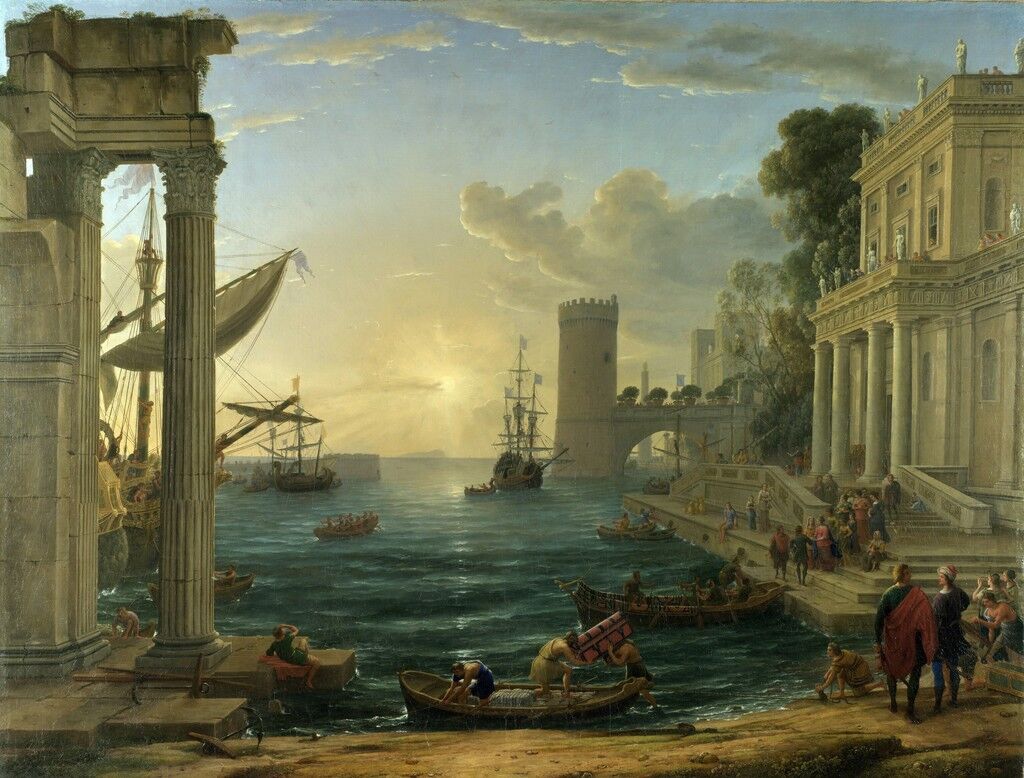
Embarkation of the Queen of Sheba, 1648
Oil on canvas
58 3/10 × 76 in
148 × 193 cm
His work relates to my process in adding emotion to his scenes.
LeBourdais, George. P. 6 January 2016, Retreived 12/ June 2019 https://www.artsy.net/article/artsy-editorial-these-masters-of-the-baroque-painted-dramatic-scenes-of-spiritual-revelation
Oil on canvas
58 3/10 × 76 in
148 × 193 cm
|
His work relates to my process in adding emotion to his scenes.
LeBourdais, George. P. 6 January 2016, Retreived 12/ June 2019 https://www.artsy.net/article/artsy-editorial-these-masters-of-the-baroque-painted-dramatic-scenes-of-spiritual-revelation


Comments
Post a Comment