BVA313 Art Theory question 28/3/19
Question for PowerPoint due 2 April 2019
'How does the moment of discovery associated with the found object inform art making processes?'
 |
| Lucy Murdoch 2019 - Penny's Pony Ride - Assemblage art |
The slice of my project question centers around the aspect of collecting and making. Assemblage and the found object, the joy of making and creating without a predetermined outcome.
How do the found objects inform the conceptual development of art making?
Collectors as artists - this blog explores famous artists who collected objects (not necessarily of high value) -
This is useful as a resource when looking at my character collections, and collections of materials.
Update: 11 July 2019 - I have moved on spare dolls and objects I no longer need for my project, they have gone to other collectors or back to charity shops to be recycled - my way to play an active part in recycling and hopefully less landfill etc.
Key words
- Assemblage
- Sculpture
- Fantasy Art
- Fantastical Art
- Collector
List of artists to look at: multi disciplines centered around collecting | the object and how they use and make with materials collected.
- Pablo Picasso - multi disciplines of historical importance - the founder of assemblage art using non traditional and everyday objects - he forms a historical place in my investigations.
- Marcel Duchamp - assemblage and installations - his unusual work startled the art world who shunned his new visions. He was a hero to the 'Art brut' or outsider and naive artists not accepted in the fine art circles.
- Kurt Schwitters - German artist - 1887-1948 Installation art founding artist. movements : dadaism, constructivism, surrealism,
- Robert Rauschenberg - USA - Assemblage - innovator and unique artist - worked in multi disciplines, always evolving during his long career as an artist.
- Eugenia Loli - USA digital collage using photo images - postcards - useful for poster ideas.
- Don Driver - NZ collage, installation, found object, assemblage
- Patrick Pound - contemporary NZ artist who is also a collector. His collections often form the basis of artwork as opposed to being materials to use in art works.
Degrees of separation: Picasso leads to Duchamp who leads to Rauschenberg and he leads to Don Driver (NZ) and onto Patrick Pound a contemporary NZ Artist - this will be a strong focus as all artists worked with found objects and were innovators in their time. Most practiced multi-art disciplines. Recycled art is nothing new, it might be trendy or topical now to be an environmentally conscious artist but since the early 1900's a handful of innovators paved the way.
Patrick Pound - photography - collector|artist
Patrick Pound - Collection artist. New Zealand born, Melbourne-based, artist and lecturer Dr Patrick Pound has exhibited widely in Australia and New Zealand since the early 1980s. He has held more than 50 solo exhibitions and been in more than 80 curated exhibitions across the world.Aug 11, 2018
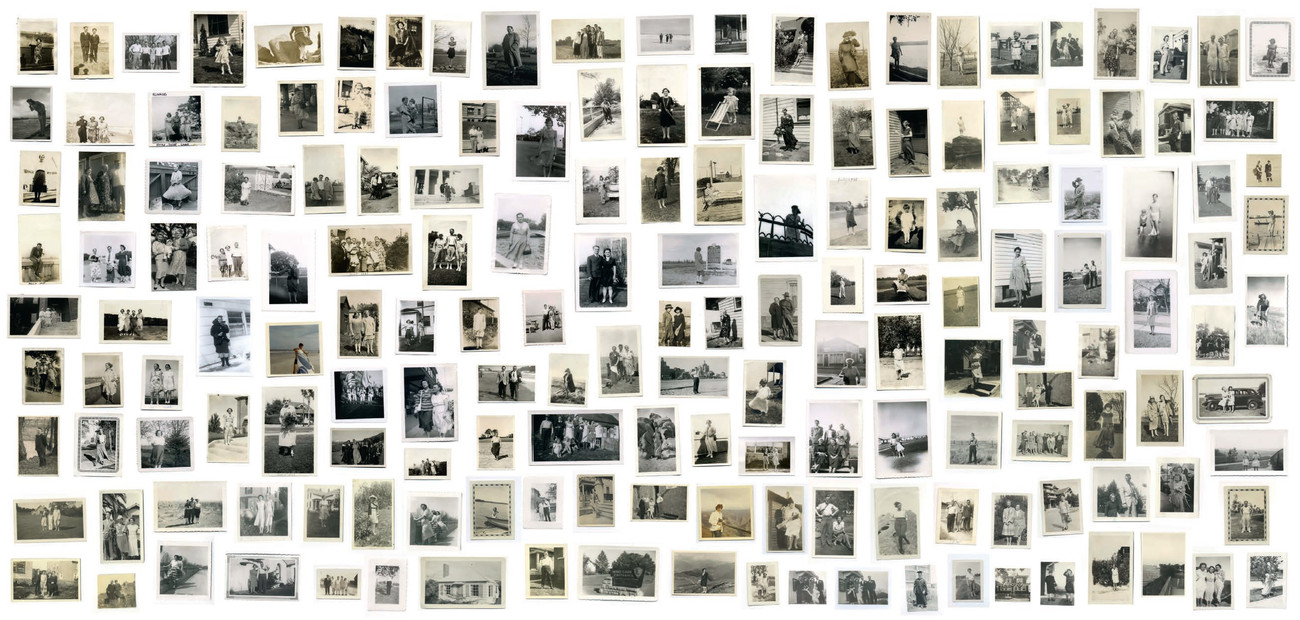 |
| https://christchurchartgallery.org.nz/bulletin/181/patrick-pound-gathering-thoughts-through-things Asked how his practice of collecting began, Patrick Pound reflects, 'I began collecting things to inform my work and what gradually seems to have happened is that the collections became the work.' He describes his transition from collecting informing his practice, to collecting being his practice: 'I used to make collages more often than I do now. Collage is the limit case of citation. A piece of a thing stands in for itself rather than the artist rendering it. I think the collection works grew out of the slow realisation that the things could and should speak for themselves. I was always rather suspicious of any sort of artful mannerism, and was more interested in the way artworks held ideas I suppose. When you put collected things together they work in a sort of collage anyway. A bit like a newspaper with its peculiar and random juxtapositions. |
 |
| source: https://artblart.com/category/man-ray/ Installation view of the exhibition 'Patrick Pound: The Great Exhibition' at NGV Australia 2017/18 |
Artists who work in assemblage and collage, installations and similar styles.
Don Driver
https://www.art-newzealand.com/Issues11to20/driver.htm
https://ocula.com/artists/don-driver/
Throughout his career Don Driver has used found material as the subject for both oblique and disturbing narratives and for their surfaces, shapes, textures and colours.
1930-2011 lived in New Plymouth, in the North Island of New Zealand since childhood, Driver is a self-taught artist with his work both idiosyncratic and international in its influences. His practice has evolved from relief paintings in the early 1970s, (sharing much in common with artists, Don Peebles and Kenneth Noland), to 'arte povera', constructing narratives that seem distinctly familiar with materials that reference the lives of ordinary New Zealanders.
However, whether inspired by American abstraction or undermining household objects such as pipes, strips of rubber, prams, or leather and plastic in a single work, Driver constructs images that are disturbing, entertaining and highly memorable.
 |
| https://teara.govt.nz/en/photograph/41978/don-driver-assemblage-artwork |
https://www.indesignlive.com/the-ideas/picasso-the-collector

We do not often think of famous artists as collectors, but quite often they have spent years acquiring, and being inspired by, the work of other artists.
The Gallery of Modern Art is soon to present ‘Picasso and his Collection’ – an exhibition that shows works from Picasso’s 150-strong collection of art by names such as Chardin, Le Nain, Matisse, Renoir, Cézanne, Rousseau, Miro, Modigliani and Braque, as well as a selection of Oceanic and African works.
These will be shown alongside around thirty of Picasso’s own works, providing clues as to Picasso’s inspiration through his career. ‘Picasso and his Collection’ at GoMA is the first time that this collection has been shown outside Europe.
The exhibition ’Picasso & his Collection’ will be shown exclusively in Brisbane from June 9 to September 14. Gallery of Modern Art, Stanley Place, South Bank, Brisbane. Monday to Friday 10.00am – 5.00pm, Saturday and Sunday 9.00am – 5.00pm.
Jesse, 29 April, 2008, https://www.indesignlive.com/the-ideas/picasso-the-collector retrieved 11/7/19

Pablo Picasso
Still Life 1914
Tate
© Succession Picasso/DACS 2019
 |
Kurt Schwitters |
The use of assemblage as an approach to making art goes back to Pablo Picasso’s cubist constructions, the three dimensional works he began to make from 1912. An early example is his Still Life 1914 which is made from scraps of wood and a length of tablecloth fringing, glued together and painted. Picasso continued to use assemblage intermittently throughout his career.
In 1918 dada artist Kurt Schwitters began to use scavenged scrap materials to create collages and assemblages – he called this technique ‘merz’. Assemblage also became the basis for many surrealist objects. Inspired by psychologist Sigmund Freud’s writings about the unconscious and dreams, surrealist artists often combined unlikely combinations of found objects to create surprising and unsettling sculptures.
Take an object / Do something to it / Do something else to it. [Repeat.]
(Jasper Johns, sketchbook note, 1964)
(Jasper Johns, sketchbook note, 1964)
In the 1950s and 1960s assemblage became widely used. Artists Jasper Johns and Robert Rauschenberg adopted an apparently anti-aesthetic approach to making art. They used scrappy materials and found objects alongside messily applied paint to create expressionist reliefs and sculptures, earning them the name neo-dada. Artists of the Italian arte povera movement, such as Mario Merz, made artworks using an assemblage of throwaway natural and everyday materials including, soil, rags and twigs. Their aim was to challenge and disrupt the values of the commercialised contemporary gallery system.
Related techniques
FOUND OBJECT
A found object is a natural or man-made object, or fragment of an object, that is found (or sometimes bought) by an artist and kept because of some intrinsic interest the artist sees in it
READYMADE
The term readymade was first used by French artist Marcel Duchamp to describe the works of art he made from manufactured objects. It has since often been applied more generally to artworks by other artists made in this way.
A READYMADE TERM…!
Interestingly, the term chosen by Duchamp to describe his new approach to art making is in itself one that is ‘readymade’. By the end of the nineteenth century the term ‘ready-made’ was being used to describe objects that were manufactured as opposed to being handmade.
IN FOCUS: DUCHAMP’S THEORY OF THE READYMADE
The theory behind the readymade was explained in an anonymous editorial published in the May 1917 issue of avant-garde magazine The Blind Man run by Duchamp and two friends:
Whether Mr Mutt with his own hands made the fountain or not has no importance. He CHOSE it. He took an ordinary article of life, and placed it so that its useful significance disappeared under the new title and point of view – created a new thought for that object.
There are three important points here: first, that the choice of object is itself a creative act. Secondly, that by cancelling the ‘useful’ function of an object it becomes art. Thirdly, that the presentation and addition of a title to the object have given it ‘a new thought’, a new meaning. Duchamp’s readymades also asserted the principle that what is art is defined by the artist. Choosing the object is itself a creative act, cancelling out the useful function of the object makes it art, and its presentation in the gallery gives it a new meaning. This move from artist-as-maker to artist-as-chooser is often seen as the beginning of the movement to conceptual art, as the status of the artist and the object are called into question. At the time, the readymade was seen as an assault on the conventional understanding not only of the status of art but its very nature.
Mixed Media
Mixed media is a term used to describe artworks composed from a combination of different media or materials.
 |
| Pablo Picasso Bottle of Vieux Marc, Glass, Guitar and Newspaper 1913 Tate © Succession Picasso/DACS 2019 |
The use of mixed media began around 1912 with the cubist collages and constructions of Pablo Picasso and Georges Braque, and has become widespread as artists developed increasingly open attitudes to the media of art. Essentially art can be made of anything or any combination of things.
MIXED MEDIA VS. MULTI-MEDIA
What is the difference between mixed media and multi-media artworks? While both terms describe artworks that are made using a range of materials, multi-media is generally used to define an artwork that uses or includes a combination of electronic media, such as video, film, audio and computers.
Collage
Collage describes both the technique and the resulting work of art in which pieces of paper, photographs, fabric and other ephemera are arranged and stuck down onto a supporting surface.
 |
| Sir Eduardo Paolozzi Meet the People 1948 Tate © The estate of Eduardo Paolozzi
The term collage derives from the French term papiers collés (or découpage), used to describe techniques of pasting paper cut-outs onto various surfaces. It was first used as an artists’ technique in the early twentieth century.
Collage can also include other media such as painting and drawing, and contain three-dimensional elements.
For my practice collage or bri-collage could be a way of presenting a story. The use of figures and drawings, a book, in a assemblage/installation in a gallery setting for the viewer. The use of dioramas is something that I have been testing as a medium to present a story. Another aspect is the possibility of stop motion animation but time is becoming a factor is this decision. |
References
Lazic, S. (2014,
November 17). What artists collect is a true reflection of their
freferences, style and attitude. Retrieved July 11, 2019, from Widewalls:
https://www.widewalls.ch/what-do-artists-collect/


Comments
Post a Comment