BVA312 Art History 19/3/19
BVA312 19/3/19
Week 7
European Art and Africa - link to Africa Time line
- see PowerPoint for week 7 for details
1483 Portuguese enter Africa - beginning of slave trade.
Juan de Pareja (1606-1670), 1650
Velazquez (Diego Rodriguez de Silva y Velasquez) Spanish
Authors:
Onyeka Nubia: Blackamoors: Africans In Tudor England, Their Presence, Status and origins (2013) book
Miranda Kaufman: Black Tudors
African Presence In Tudor England - YouTube clip
How do we remember people from the past? Are we influenced by images in galleries which might give us a false idea of that past. 15th and 16th C Britain was not an imperial nation. recorded histories are incorrect.
Portuguese saw Africans as some sort of traded commodity,
Africans and their descendants have been part of British history for thousands of years. 5th c Vandals army led by black Africans. 800 BCE to 15th c. and 16th C .
Moore's - typically a Blackamoore or black colored person. Spanish history shows influences from outside of Europe.
Reference of European society - the Mona Lisa is a familiar image and topic - discussed around Renaissance Europe.
Unknown - Catarina - drawing of a black woman - viewing through Victorian eyes.
Moorish kingdoms on the Iberian Peninsula. Southern Europe 14th & 16th C - Renaissance was happening in West African Kingdoms - exportable ideas - written histories - rich with literature. Poetry, stories, information about Europe. West African scholars were writing about Europe. Morocco and the Ottoman empire. Conquered and scholars and works destroyed. Translated from Arabic into Latin.
Black Saints - St Maurice - patron saint of knights. European mythology. Cathedral of Saint Catherine. 14th C

https://www.johnblanke.com/st-maurice.html
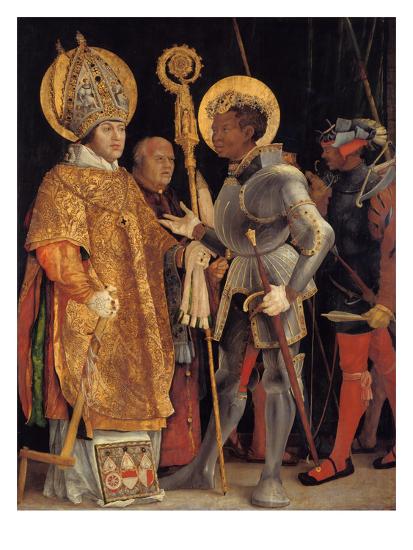
https://www.allposters.com/-sp/Saint-Erasmus-and-Saint-Maurice-Posters_i9228744_.htm
Adoración de los Reyes Magos by El Greco, 1568 (Museo Soumaya, Mexico City)

Balthazar, the African Magi - Three wise kings - Nativity story.
Histories were obscured and truths about the people who really lived in early Britain. Black Knight and Black Lady Days were celebrated in Scotland.
Morien - a knight in the legends of King Arthur. Morien appears in 13th C European legends of Lancelot and the Romance of Morien. Non Christian and African knights were included in early images and literature. St Thomas of Beckett - Black woman depicted as his mother - of Syrian descent.
Records of Blackamoores who were not slaves, births and deaths records - Mary Fillis - baptized 3 June 1597. She has the largest record of any recorded. She willingly became a Christian. She was part of a church parish and a community - fully accepted and included.
John Blanke on the Westminster Tournament Roll, 1511 Blanke is a central figure, a dispensation to wear different attire than his fellow people. Represents Moorish culture, Iberian Culture. Cultures that might have been more advanced.
Miranda Kaufman - Blacks in Tudor and Stuart period.
Discovered history that there were black people, free people who were not slaves - married, working and part of the communities they lived in.
Part of a positive black history beyond the slave history people are familiar with. rethink what a visual image of a slave might be - e.g. Barbary Coast pirates and white slave trade and trafficking.
parish registers hold valuable information - court records are the best source of this information.
e.g. long court accounts and recordings.
Week 7
European Art and Africa - link to Africa Time line
- see PowerPoint for week 7 for details
1483 Portuguese enter Africa - beginning of slave trade.
Juan de Pareja (1606-1670), 1650
Velazquez (Diego Rodriguez de Silva y Velasquez) Spanish
Authors:
Onyeka Nubia: Blackamoors: Africans In Tudor England, Their Presence, Status and origins (2013) book
Miranda Kaufman: Black Tudors
African Presence In Tudor England - YouTube clip
How do we remember people from the past? Are we influenced by images in galleries which might give us a false idea of that past. 15th and 16th C Britain was not an imperial nation. recorded histories are incorrect.
Portuguese saw Africans as some sort of traded commodity,
Africans and their descendants have been part of British history for thousands of years. 5th c Vandals army led by black Africans. 800 BCE to 15th c. and 16th C .
Moore's - typically a Blackamoore or black colored person. Spanish history shows influences from outside of Europe.
Reference of European society - the Mona Lisa is a familiar image and topic - discussed around Renaissance Europe.
Unknown - Catarina - drawing of a black woman - viewing through Victorian eyes.
Moorish kingdoms on the Iberian Peninsula. Southern Europe 14th & 16th C - Renaissance was happening in West African Kingdoms - exportable ideas - written histories - rich with literature. Poetry, stories, information about Europe. West African scholars were writing about Europe. Morocco and the Ottoman empire. Conquered and scholars and works destroyed. Translated from Arabic into Latin.
Black Saints - St Maurice - patron saint of knights. European mythology. Cathedral of Saint Catherine. 14th C
https://www.johnblanke.com/st-maurice.html
https://www.allposters.com/-sp/Saint-Erasmus-and-Saint-Maurice-Posters_i9228744_.htm
Adoración de los Reyes Magos by El Greco, 1568 (Museo Soumaya, Mexico City)
Balthazar, the African Magi - Three wise kings - Nativity story.
Histories were obscured and truths about the people who really lived in early Britain. Black Knight and Black Lady Days were celebrated in Scotland.
Morien - a knight in the legends of King Arthur. Morien appears in 13th C European legends of Lancelot and the Romance of Morien. Non Christian and African knights were included in early images and literature. St Thomas of Beckett - Black woman depicted as his mother - of Syrian descent.
Records of Blackamoores who were not slaves, births and deaths records - Mary Fillis - baptized 3 June 1597. She has the largest record of any recorded. She willingly became a Christian. She was part of a church parish and a community - fully accepted and included.
John Blanke on the Westminster Tournament Roll, 1511 Blanke is a central figure, a dispensation to wear different attire than his fellow people. Represents Moorish culture, Iberian Culture. Cultures that might have been more advanced.
Miranda Kaufman - Blacks in Tudor and Stuart period.
Discovered history that there were black people, free people who were not slaves - married, working and part of the communities they lived in.
Part of a positive black history beyond the slave history people are familiar with. rethink what a visual image of a slave might be - e.g. Barbary Coast pirates and white slave trade and trafficking.
parish registers hold valuable information - court records are the best source of this information.
e.g. long court accounts and recordings.


Comments
Post a Comment